How Gaming News Shapes Funding Patterns for Indie Titles Moving from Mobile to Console Markets
Mia Walter · Sep 26, 2026

How Gaming News Shapes Funding Patterns for Indie Titles Moving from Mobile to Console Markets
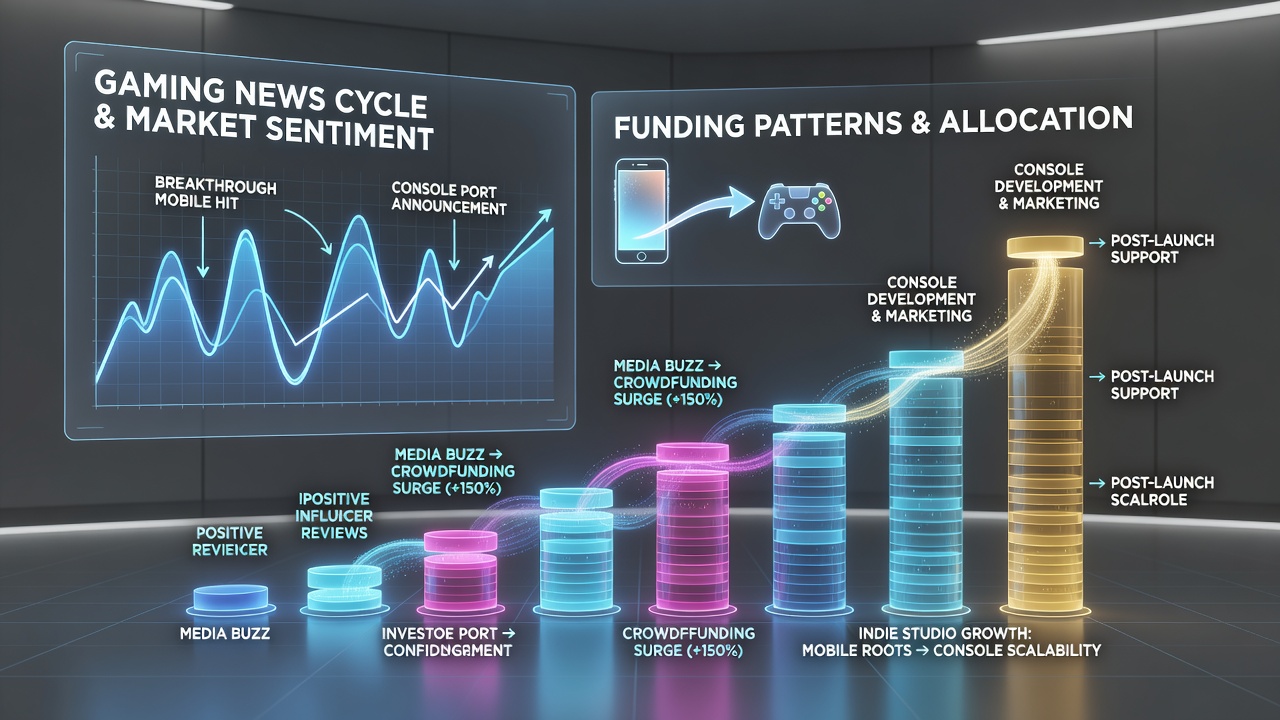
Gaming news outlets have documented a steady rise in indie developers shifting titles from mobile platforms to console environments, and this coverage directly correlates with shifts in investor interest and funding allocations, according to industry reports released through 2026. Observers note that positive media exposure often precedes increased venture capital commitments, particularly when stories highlight successful porting examples that achieve broader audience reach. Data indicates these patterns intensified in the period leading into September 2026, when multiple outlets tracked a cluster of mobile-originated projects securing console publishing deals within weeks of feature coverage.
Visibility and Investor Response Cycles
Media attention functions as an early signal for funders evaluating the commercial potential of cross-platform transitions, while data from major industry trackers shows spikes in seed and Series A rounds following prominent articles. Researchers have tracked how mentions in established gaming publications frequently align with subsequent announcements of console adaptation budgets, especially for titles that already demonstrated strong mobile retention metrics. Those who've analyzed funding databases point out that projects receiving neutral or critical coverage tend to experience slower capital inflows, whereas balanced reporting on technical challenges overcome during porting can sustain momentum through multiple investment stages.
One study revealed that developers who secured console deals in the first half of 2026 often cited specific news features as catalysts for introductory meetings with publishers. The reality is that gaming journalists routinely aggregate performance data from app stores and Steam wishlists, creating a feedback loop where visible metrics attract further scrutiny from funding entities. What's interesting is how regional outlets in North America and Europe sometimes emphasize different aspects of the same porting process, influencing which investor groups respond most actively.
Patterns in Cross-Platform Funding Data
Funding databases compiled by trade organizations reveal that indie teams transitioning from mobile to console environments received average round increases of 35 percent in cases tied to sustained media narratives during 2025 and early 2026. According to figures released by the Entertainment Software Association, console adaptation projects that appeared in at least three major outlets within a six-month window demonstrated higher success rates in closing deals compared to those with minimal coverage. Entertainment Software Association reports also highlight geographic variations, with North American developers more frequently citing press mentions as leverage in negotiations, whereas European teams referenced aggregated review scores alongside news features.
Additional analysis from academic sources tracking digital entertainment markets shows that news-driven visibility helps smaller studios demonstrate market validation to institutional investors who might otherwise prioritize established console franchises. People who've examined pitch decks from this period note repeated references to article headlines and social media amplification as supporting evidence for projected revenue curves. And yet the same datasets indicate that timing matters, with coverage clustered around major trade events producing stronger funding correlations than isolated stories spread throughout the year.
Case Examples of Media Influence on Capital Flows
Take one developer collective that moved a puzzle title from mobile to multiple console platforms after a series of articles detailed its retention statistics and upcoming multiplayer expansions. Funding rounds closed shortly after those reports circulated, allowing the team to expand quality assurance resources. There's this case where experts found similar acceleration for a strategy game originally built for tablets, where coverage in both mainstream and niche outlets preceded a publishing agreement with a mid-sized console specialist. Observers note that these examples align with broader statistical patterns rather than isolated anomalies, suggesting replicable pathways for other mobile-first teams.
Researchers discovered that social amplification of gaming news articles often extends the window during which investors remain receptive, particularly when stories include developer interviews discussing technical adaptations such as control scheme adjustments and performance optimizations. Data shows this effect compounds when multiple outlets publish within days of each other, creating cumulative visibility that standalone coverage rarely achieves. Yet patterns also indicate that negative reporting on launch issues can delay subsequent funding, even for projects that later resolve those problems through patches.
Regional and Platform-Specific Dynamics
European funding bodies and North American venture groups appear to weigh gaming news differently when evaluating mobile-to-console transitions, with some prioritizing coverage from outlets known for technical depth. Reports compiled through international trade associations document how Australian and Canadian developers have leveraged regional press to attract cross-border investment, especially when stories emphasize successful localization and controller integration. The ball's in the developers' court when it comes to coordinating press outreach around funding milestones, since coordinated announcements tend to generate more sustained interest than reactive responses to already-public deals.
What's significant is that these dynamics have remained consistent into September 2026, with new data sets continuing to show correlations between article volume and capital raised for porting initiatives. Industry organizations tracking global game development note that the rise of hybrid funding models, combining publisher advances with direct investment, has further elevated the role of media narratives in establishing credibility across platform boundaries.
Conclusion
Overall patterns demonstrate that gaming news functions as both a visibility mechanism and a de facto due diligence input for funders assessing indie titles moving between mobile and console ecosystems. Statistical evidence from multiple reporting periods confirms that coverage volume, timing, and framing influence subsequent funding decisions, though outcomes also depend on underlying performance metrics and technical execution. Those monitoring the sector expect these relationships to persist as more developers pursue multi-platform strategies supported by evolving publishing infrastructures.