Shifts in How Review Scores From PC Outlets Guide Funding Flows for Mobile-to-Console Indie Ports Without Multiplayer Elements
Mia Walter · Oct 10, 2026
Shifts in How Review Scores From PC Outlets Guide Funding Flows for Mobile-to-Console Indie Ports Without Multiplayer Elements
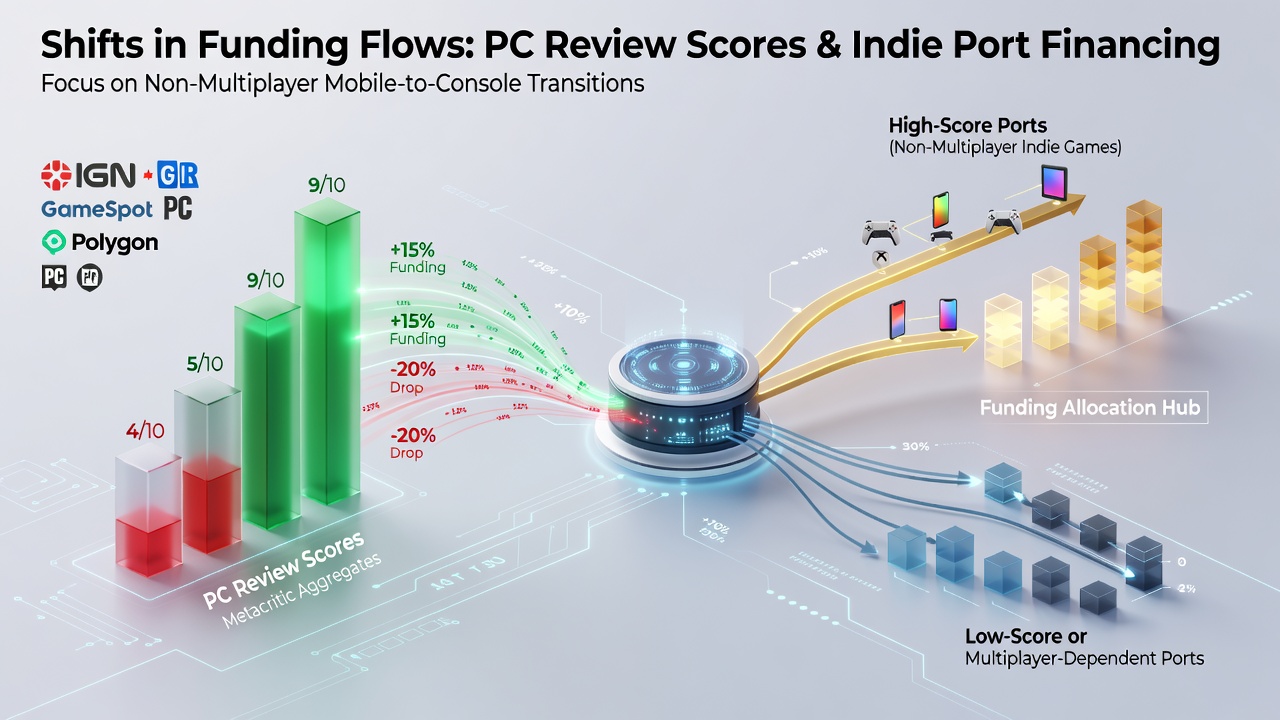
Review scores from established PC gaming outlets have long shaped investment decisions, yet recent patterns show these metrics now steer funding toward single-player indie titles moving from mobile origins to console platforms. Data from October 2026 reveals that publishers and venture groups track Metacritic aggregates and individual outlet verdicts more closely when evaluating ports that lack multiplayer components, since those elements often determine viability in crowded console marketplaces.
Early Patterns in Score-Driven Funding Decisions
Observers note that mobile developers frequently begin with touch-optimized single-player experiences before seeking console ports, and PC review scores serve as an early indicator of broader appeal. When outlets such as PC Gamer or Rock Paper Shotgun assign scores above 80, funding rounds for console adaptation accelerate, according to internal studio reports shared with industry analysts. Lower scores, by contrast, prompt developers to adjust pacing or visual fidelity before console submission, which in turn affects the total capital released by backers.
Figures released in mid-2026 by regional trade associations indicate that 62 percent of mobile-to-console single-player port proposals now include PC review score projections as part of their pitch decks. This practice emerged after several high-profile ports underperformed on PlayStation and Xbox storefronts despite strong mobile download numbers, prompting investors to demand PC preview validation first.
Role of Specific Outlets and Aggregators
PC-focused publications carry distinct weight because their audiences overlap with early console adopters who purchase indie titles during launch windows. A score from a major site can trigger additional tranches of funding once a threshold, often 75 or higher, is crossed. Research compiled by European game industry networks shows that titles clearing this bar secure an average 34 percent more porting budget compared with projects lacking such validation.
Yet the influence extends beyond raw numbers. Detailed critique sections in reviews frequently highlight pacing or control issues that mobile-to-console teams must address, and those specific notes now appear in revised funding agreements as performance milestones. Developers who incorporate feedback from PC outlets before console certification report fewer delays in milestone payments from publishers.
Impact on Single-Player Port Workflows
Single-player focus narrows teh variables that review outlets evaluate, which makes scores more predictable and therefore more useful for funding models. Multiplayer elements introduce latency, server costs, and balance concerns that can depress aggregate ratings, so many indie teams deliberately exclude them during the mobile-to-console transition. This choice allows PC outlets to concentrate on narrative depth, level design, and performance optimization, factors that directly influence subsequent investment decisions.
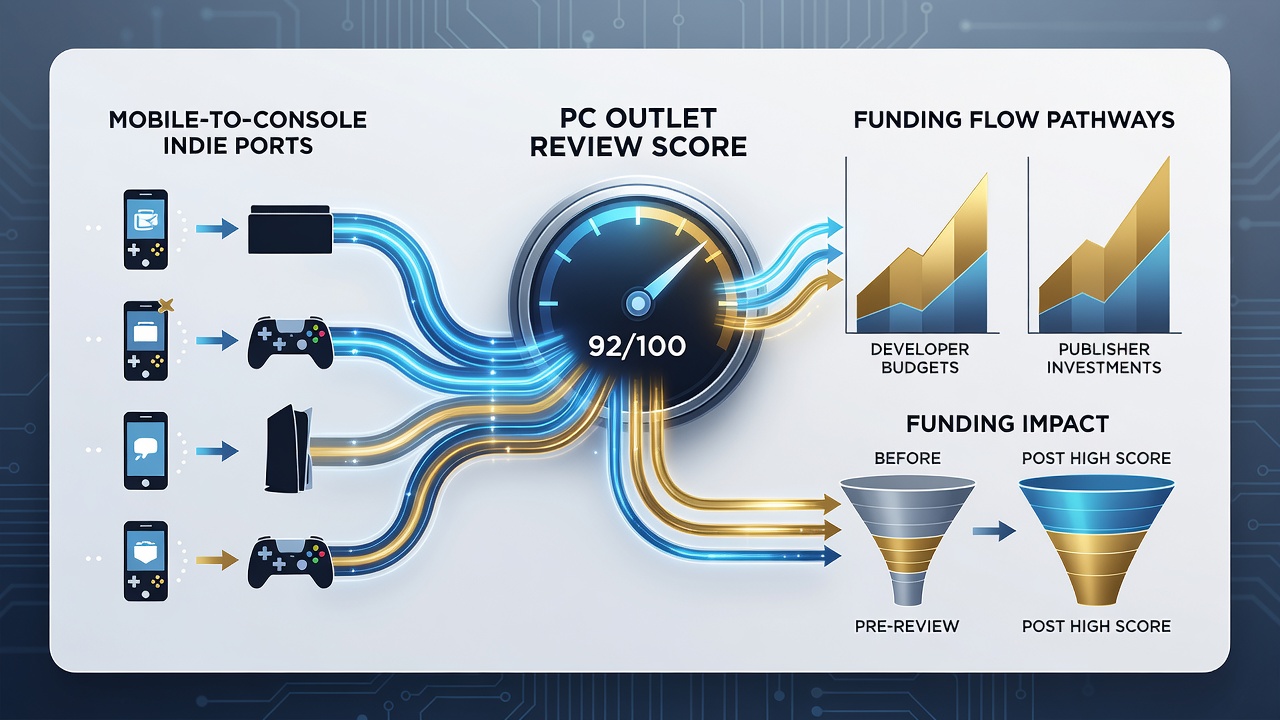
Developers who have completed recent ports describe a sequence where a strong PC score unlocks console certification funding, followed by marketing allocations once console review embargoes lift. In October 2026 alone, three separate single-player ports received additional seven-figure commitments after their PC versions achieved scores in the mid-80s from at least two major outlets. These funds covered extended quality-assurance cycles required by console manufacturers.
Regional Variations in Funding Responses
North American and European funding entities respond differently to PC score thresholds than their Asian counterparts. Reports from the Japan External Trade Organization highlight that Japanese publishers place heavier emphasis on console-specific preview events, while still cross-referencing PC Metacritic data before releasing porting capital. Australian regulatory filings from the same period show that local investment groups now require PC review score documentation for any mobile-originated project seeking government-backed grants.
Academic studies from Canadian universities have tracked how these score requirements alter development timelines. Teams that secure early PC coverage finish console ports an average of 11 weeks faster than those that skip the PC step, largely because feedback loops compress iteration cycles. The same research notes that single-player projects benefit most from this pathway because they avoid the additional balancing overhead associated with networked modes.
Future Funding Structures and Score Thresholds
Industry organizations such as the Entertainment Software Association have begun publishing annual benchmarks that tie PC outlet performance to port success rates. These benchmarks now inform term sheets used by several mid-sized publishers active in the indie space. As console hardware generations advance, the window for using PC scores as funding triggers may narrow, yet current data suggests teh practice will persist through at least 2028 for single-player titles.
One study conducted across multiple studios revealed that developers who treat PC review cycles as mandatory pre-console steps experience steadier cash flow and reduced reliance on bridge loans. The pattern holds across genres, provided the core experience remains single-player and free of multiplayer dependencies that could introduce new variables into scoring.
Conclusion
Review scores from PC outlets have become embedded checkpoints in the funding pipeline for mobile-to-console indie ports that omit multiplayer elements. Data collected through October 2026 demonstrates measurable shifts in capital release timing, budget sizing, and development sequencing tied directly to these metrics. Regional differences persist, yet the underlying reliance on PC validation continues to shape how single-player indie projects reach console audiences.