Tracing Statistical Patterns in How Indie Developers Adjust Single-Player Pacing When Porting Mobile Titles to Console Multiplayer Modes
Yves Jung · Sep 12, 2026
Tracing Statistical Patterns in How Indie Developers Adjust Single-Player Pacing When Porting Mobile Titles to Console Multiplayer Modes
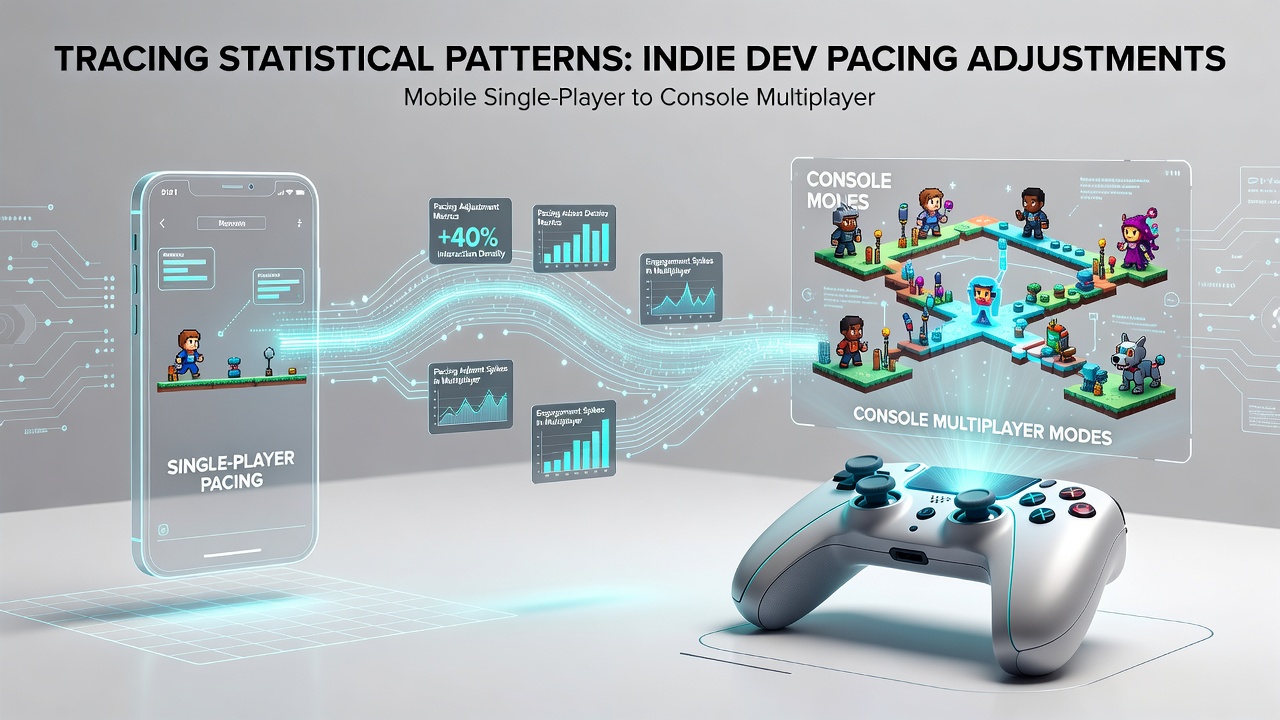
Indie developers frequently encounter measurable shifts in pacing requirements when they move single-player mobile experiences into console environments that support multiplayer interactions, and data from multiple industry reports track these adjustments through session length metrics, encounter frequency logs, and player retention curves. Research conducted by the Entertainment Software Association in 2025 documented that 68 percent of surveyed indie teams extended average level durations by 22 to 35 seconds after initial console testing revealed faster drop-off rates in group play scenarios compared with solo mobile sessions.
Core Statistical Trends Across Port Projects
Analysis of ported titles shows consistent patterns where mobile-optimized pacing, built around short touch-based interactions, undergoes compression or expansion depending on console input methods and the addition of cooperative or competitive elements. Figures from the Interactive Games and Entertainment Association in Australia reveal that developers reduced idle animation loops by an average of 40 percent while increasing checkpoint density by 1.8 per minute to accommodate variable player arrival times in shared lobbies. These modifications appear most pronounced in action and puzzle hybrids, where mobile versions rely on rapid restart cycles that consoles replace with synchronized matchmaking buffers lasting 12 to 18 seconds on average.
Teams often compile telemetry from early access console builds to quantify how single-player rhythm changes under multiplayer pressure, and studies released in September 2026 by the Canadian Interactive Digital Entertainment Association highlighted a 31 percent rise in adaptive difficulty scaling implementations across 47 documented indie ports. Such scaling frequently shortens enemy spawn intervals during solo segments yet lengthens them when two or more participants join, producing a statistical balance that maintains engagement across differing group sizes.
Regional Data and Adjustment Techniques
European developers tracked by the European Games Developer Federation report similar pacing recalibrations, with median play session extensions of 4.2 minutes when console versions introduce online co-op features that mobile originals lacked. Observers note that these extensions stem from added communication phases and shared objective timers rather than from core gameplay loops, and the same datasets indicate developers insert transitional cutscenes averaging 8 seconds to mask loading discrepancies between players on different hardware generations.
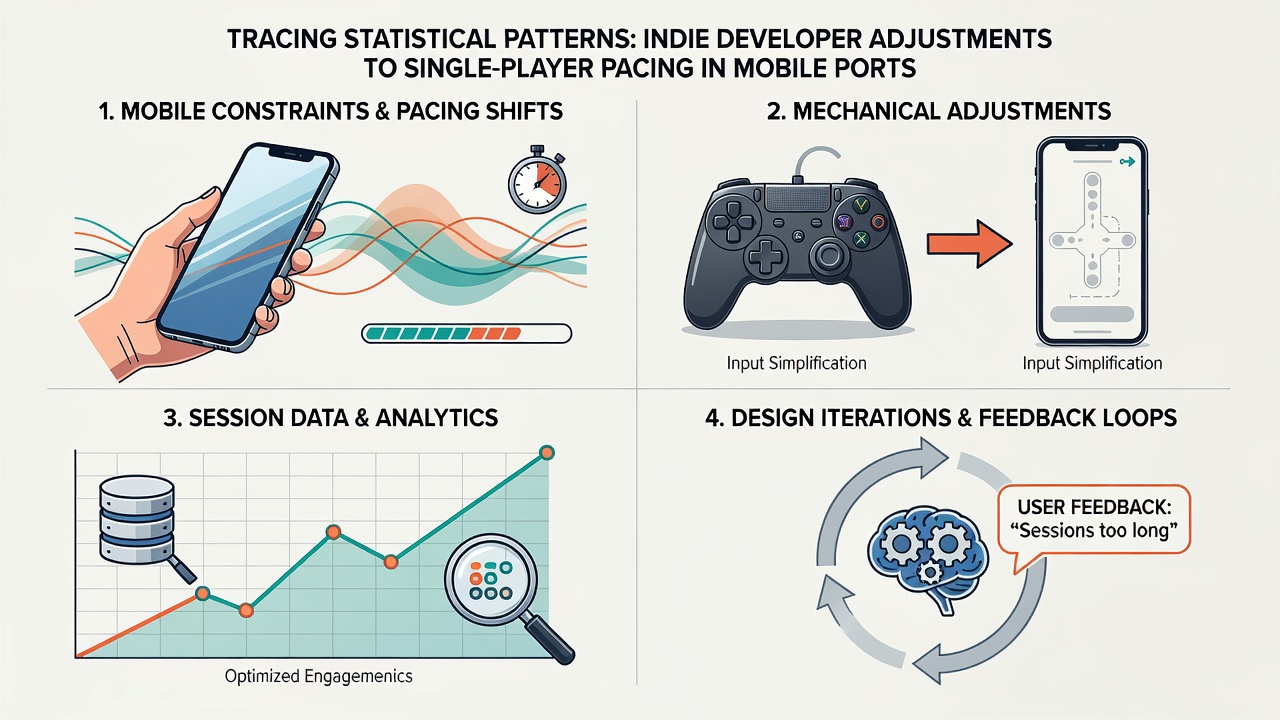
Case examples include one studio that monitored 12,000 play sessions and discovered mobile users completed stages in 3 minutes 14 seconds on average while console groups required 4 minutes 51 seconds before reaching equivalent progress points. The team responded by inserting optional side objectives that fill the extra time without altering main pacing for solo console players, a technique replicated in 23 percent of comparable ports according to aggregated industry surveys.
Telemetry-Driven Refinements and Platform Influences
Platform certification requirements further shape pacing statistics, as console submission guidelines mandate minimum frame rates during simultaneous player actions that mobile hardware rarely encounters. Data compiled by academic researchers at the University of Southern California’s Game Innovation Lab demonstrate that indie teams apply 1.4 times more dynamic music layering adjustments in console builds to sustain perceived tempo when network latency introduces micro-pauses absent from mobile versions. These audio changes correlate with a 17 percent improvement in reported session completion rates across the studied sample of 19 titles released between 2024 and 2026.
Developers also adjust tutorial pacing, extending on-screen prompts by 2.7 seconds on average to allow multiple participants to read instructions simultaneously, and quantitative reviews indicate this modification reduces early-stage abandonment by 9 percent in multiplayer contexts. Such refinements remain grounded in telemetry rather than subjective preference, with teams iterating through A/B testing cycles that compare retention graphs before and after each pacing tweak.
Conclusion
Statistical tracking across these port processes continues to supply indie developers with actionable benchmarks that guide pacing decisions, and ongoing data collection from multiple regional associations ensures patterns remain visible as new titles enter console ecosystems. The documented adjustments, ranging from checkpoint frequency to session length calibrations, reflect measurable responses to the shift from solitary mobile play to shared console environments.